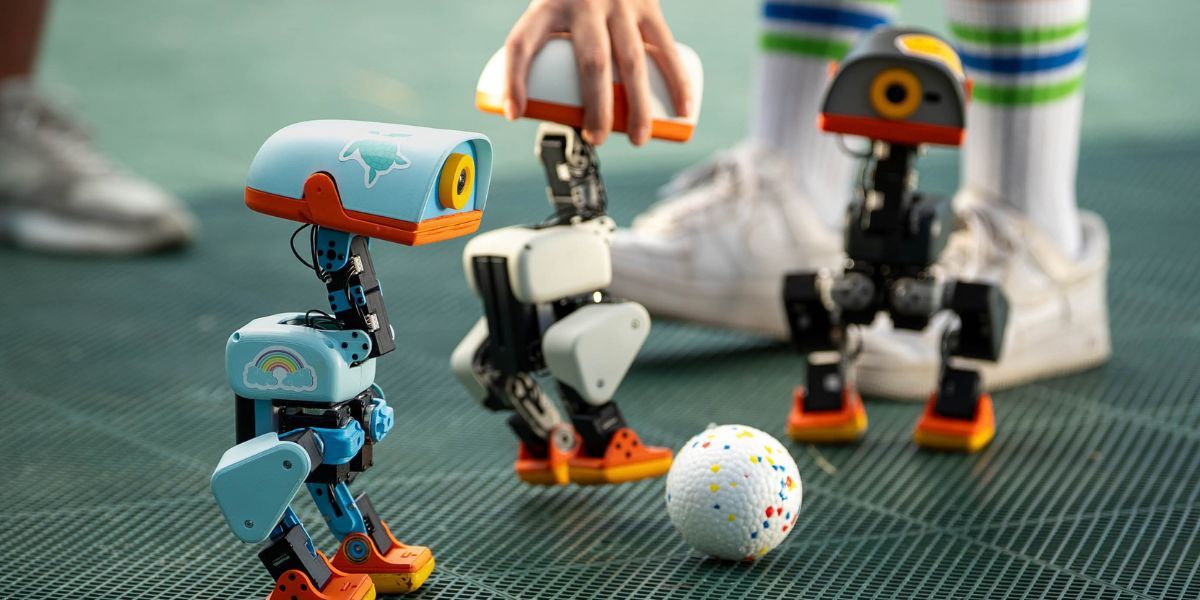
Technology often takes itself far too seriously. We are constantly promised revolution via sleek black slabs, hyper-efficient processors, and solemn corporate keynotes about changing the world. But every so often, an innovation comes along that reminds us why we fell in love with gadgets in the first place: sheer, unadulterated curiosity wrapped in a charmingly ridiculous package. Enter Microduck, a 25-centimetre, open-source bipedal robot that waddles, falls over, picks itself up, and asks nothing more than for you to teach it how to skate.
Why Build a Robot Duck?
The story behind Microduck is rooted in the practical frustrations of modern robotics development. Training physical artificial intelligence and reinforcement learning models is usually an expensive, high-stakes endeavour. Large humanoid robots are heavy, costly, and when a training script goes wrong, the result is often an expensive crash in a sealed laboratory.
Instead of building another intimidating industrial assistant, Pollen Robotics designed something compact, lightweight, and deliberately approachable. The duck persona wasn’t chosen by accident; its proportions, distinctive beak, and awkward waddle naturally lent themselves to a creature that is equal parts functional machine and desk-bound companion. It exists to bridge the gap between heavy computer simulations and real-world hardware, proving that learning machine intelligence does not require a million-dollar research grant.
Underneath the Feathers: Mechanics and Movement
Weighing in at a modest 780 grams, Microduck is deceptively sophisticated underneath its colourful shell. It packs 15 individual motors (degrees of freedom), a front-facing camera, LiDAR, and dual inertial measurement units (IMUs) running on an onboard 50 Hz control loop.
The robot can perform seven distinct pre-trained behaviours. It can track velocity as it walks, sit down and hold a pose, kick a lightweight object, and dip its beak to scoop up items before popping right back upright. It can even manage miniature roller skates if you snap them on. Crucially, when it inevitably loses its balance and tumbles flat onto its back, it does not wait for a human rescue; it executes a self-recovery routine, rolls over, and stands back up ready for the next command.
Because the entire software stack is fully open-source and hosted on GitHub and Hugging Face, developers and enthusiasts can train entirely new behaviours on their own machines and deploy them straight to the hardware.
The Microduck adventure continues, and the shipping dates are close enough to feel real now. We are proud to tell you that 10,950 Microducks will come off the line between December 10 and January 10!
— Pollen Robotics (@pollenrobotics) September 30, 2026
Weekly batches, earliest orders first. Every date is in here. pic.twitter.com/S01LjDUhiD
How It Stacks Up
When compared to traditional educational robotics kits that feel like rigid chemistry sets, or prohibitively expensive developer platforms, Microduck occupies a completely unique niche. Most consumer tech either performs a fixed set of automated tasks or sits passively on a desk. Microduck invites active participation.
Do we think it’s cool?
Is Microduck going to change global enterprise logistics tomorrow? Probably not. But it looks to achieve something far more valuable by making complex artificial intelligence tactile, understandable, and deeply entertaining. It proves that the future of robotics doesn’t have to look intimidating to be genuinely groundbreaking. Whether you are an aspiring developer looking to tinker with reinforcement learning or simply someone who appreciates a piece of technology with a personality, this little biped is well worth keeping an eye on.